The Moment That Changed My Thinking
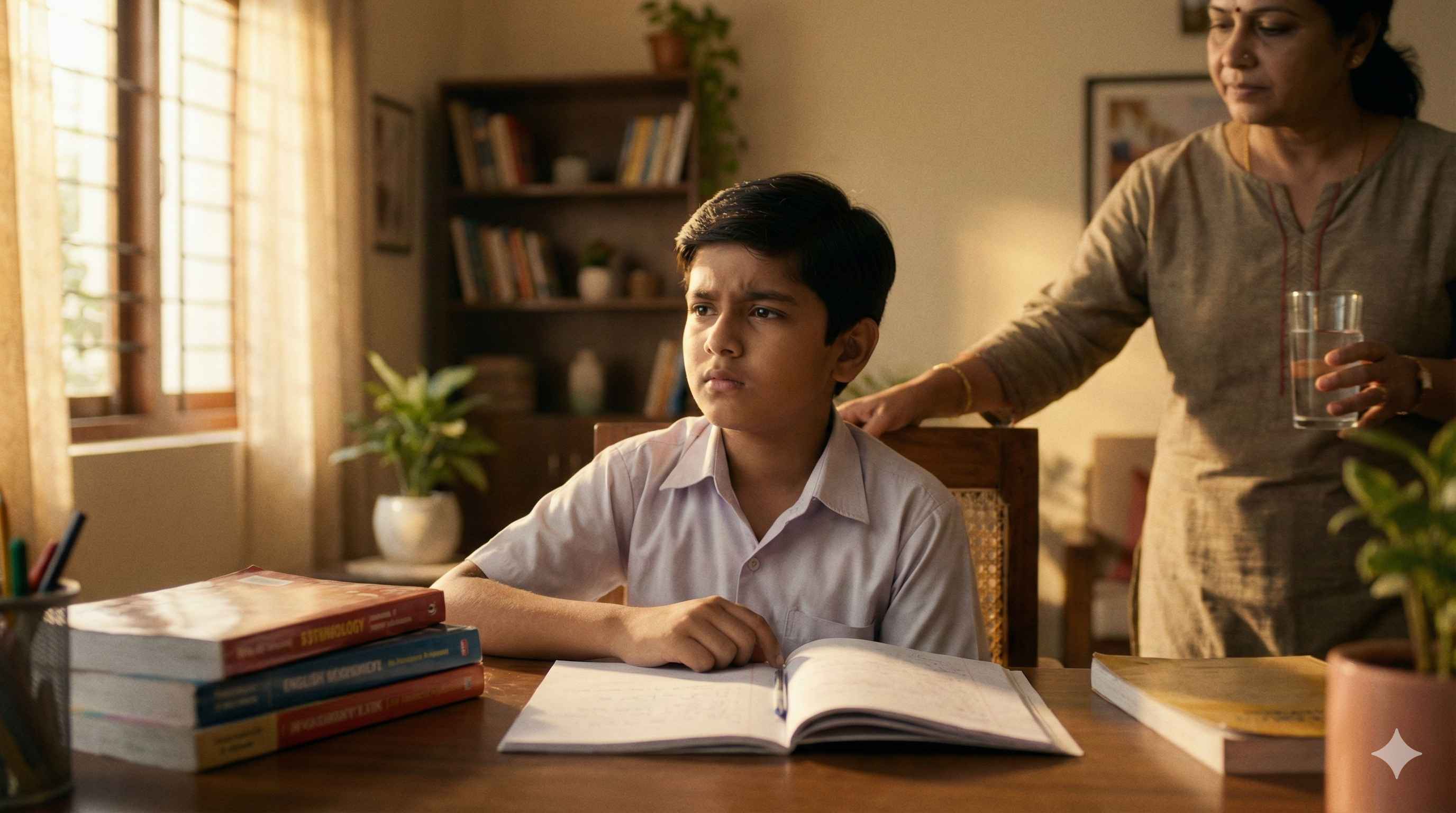
Last month, during a late evening session, an 11-year-old boy looked at me and said something I have never forgotten:
“Doctor, my brain keeps running… even when I want it to stop.”
He wasn’t anxious.
He wasn’t distracted by choice.
He wasn’t “addicted to screens.”
He was overwhelmed — mentally overloaded — in a way I now see daily in Indian children.
Between school, tuitions, homework, screens, tests, competition, and expectations…
kids are living in permanent mental traffic.
Today’s article is about that hidden overload — and how you, as a parent, can genuinely help your child regain their ability to focus.
Not through punishments.
Not through lectures.
Not through snatching devices.
But through science-backed, emotionally healthy methods.
Let’s begin.
Attention Issues Are Not Laziness — They Are Overload
Most parents assume:
- “My child doesn’t try.”
- “They don’t listen.”
- “They get distracted intentionally.”
But in reality, more than 70% of focus loss in children today comes from cognitive saturation — a fancy way of saying:
“The brain has no space left to absorb anything new.”
Their mind is full, not empty.
Modern Indian Children Have ‘Micro-Traction’ Patterns
This is a new behaviour I’ve been observing in clinics:
- Kids start a task
- Pull back
- Re-start
- Pull back again
It looks like distraction, but it’s actually micro-traction — the brain trying to grab hold of something but not getting enough grip.
This happens when:
- Tasks feel too big
- Pressure is high
- Instructions are unclear
- Attention is split
The solution?
Break tasks into chunks tiny enough that the brain stops resisting.
The “3-Minute Rule” Every Parent Needs in Their Home
Before your child begins studying, ask them to:
Do 3 minutes of one simple, predictable task.
Examples:
- Rewrite 2 lines from yesterday’s topic
- Solve one easy question
- Read one paragraph
- Draw one diagram outline
These tiny openings give the brain traction, lowering resistance by 40–60%.
Once the brain starts… it continues.
Personalized Tasking — Not One-Size-Fits-All
Every Indian child has a different learning profile.
Some kids start fast.
Some need warmup.
Some require clarity.
Some prefer examples.
Some need slow build-up.
This is why personalized learning platforms (like DeepSchool) are becoming so important — they automatically match the task difficulty, pace, and sequence to a child’s actual brain patterns.
When learning fits the child, focus naturally improves.
The “Reset Ritual” — A Simple Fix Parents Ignore
Most homes have rules like:
- “No phone while studying.”
- “Sit straight.”
- “Don’t waste time.”
But very few homes have a reset ritual, something children desperately need.
A reset ritual is a 20–40 second sensory break that resets the attention system.
Examples:
- Take 5 deep breaths
- Drink a sip of water
- Stand and stretch
- Close eyes for 10 seconds
- Fold notebook, reopen
When done every 10–15 minutes, it keeps the brain fresh and prevents spiralling distraction.
Your Tone Matters More Than You Think
Indian kids often study in a climate of:
- Fear
- Guilt
- Comparison
- Pressure
Even when parents mean well.
A child’s focus improves dramatically when the emotional climate is safe.
Say things like:
- “Let’s start small.”
- “We’ll figure this out together.”
- “I’m here to help you.”
This transforms how the child experiences learning.
The New Focus Formula for Indian Students
Here’s the simple formula I give parents in my clinic:
**Warmup (3 mins)
- Personalized Tasking (10–12 mins)
- Reset Ritual (20–40 sec)
- Reinforcement (30 sec)**
Repeated twice, this session is far more effective than a 1-hour unfocused struggle.
And if you use adaptive tools like DeepSchool, the personalized tasks + instant feedback make the routine even smoother.
Final Thoughts: Your Child’s Brain Is Not the Enemy
Your child wants to focus.
Their brain wants traction.
Their emotions want safety.
When you give them the right structure, the right chunk size, and the right tone…
they bloom.
Because focus is not discipline.
Focus is a skill.
And like any skill, it can be nurtured.