By Dr. M Surbhi, Child & Adolescent Psychiatrist · Delhi
Every week in my clinic, parents tell me the same thing:
“My child studies… but nothing stays.”
“They sit for hours, but they aren’t learning.”
“They start strong, then lose focus.”
If this sounds familiar, it’s not your child’s fault.
It’s the method that needs an upgrade.
Today’s kids — especially Gen Alpha — learn differently. They respond to short bursts, instant feedback, clear goals, and visible progress. And you can actually transform their study habits with just a few small changes.
Let’s break it down.
1. Replace Long Study Hours with Short, Focused Cycles
Kids don’t learn better by sitting longer.
They learn better by focusing smarter.
Try:
15–20 minute sessions with 2–3 minute breaks.
This respects the brain’s natural attention rhythm.
2. Build a Daily Ritual, Not a Battle
Studying should feel like brushing teeth — predictable, simple, and non-negotiable.
Set:
- A fixed time
- A fixed place
- A fixed goal
This tiny predictability reduces 70% of daily resistance.
3. Use Personalized Questions, Not Random Revision
Most kids revise blindly — repeating what they already know.
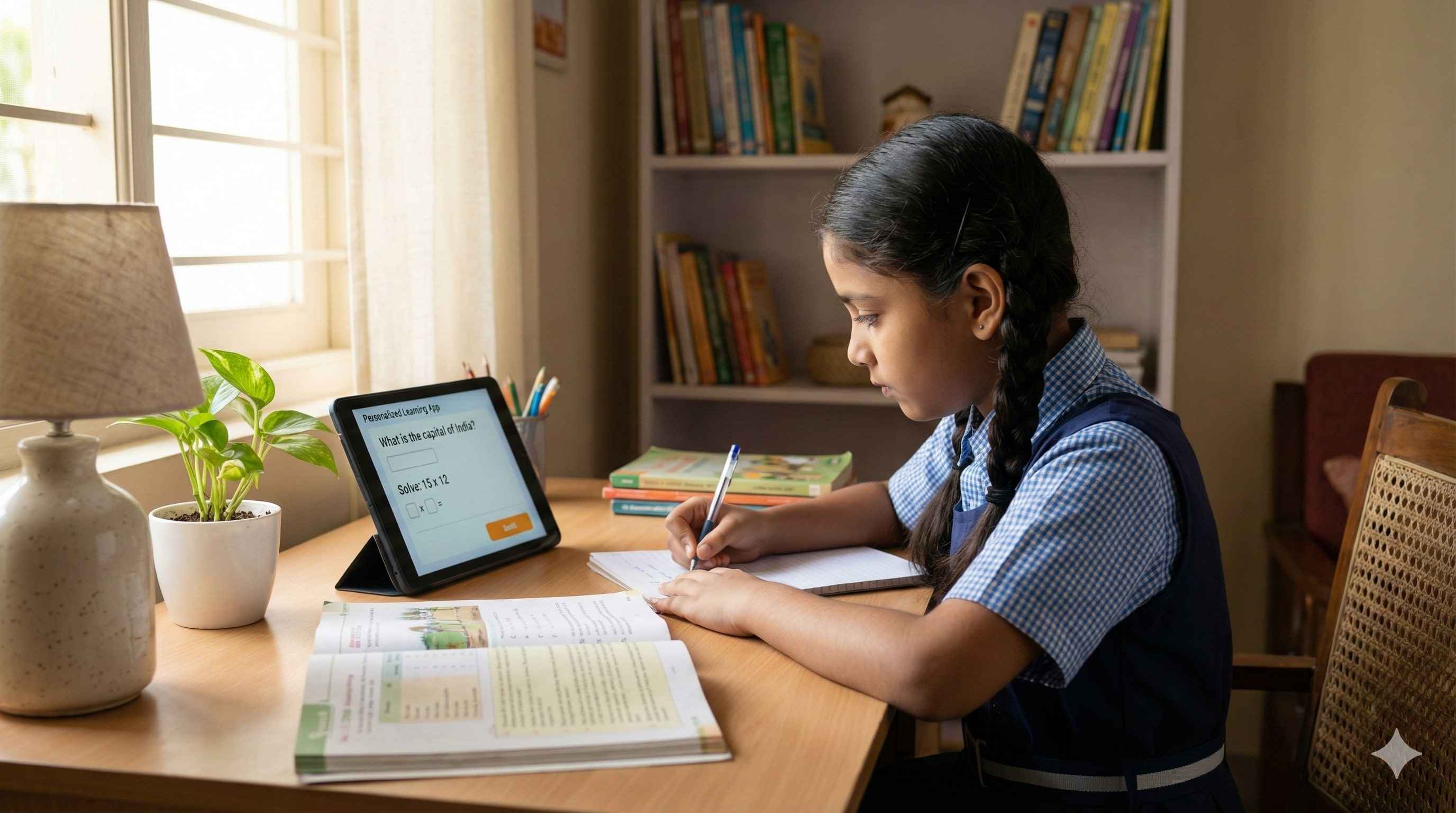
But with personalized practice (like DeepSchool offers), your child gets:
- Questions based on real weaknesses
- Adaptive difficulty
- Concept boosters when they’re stuck
This builds mastery instead of mugging.
4. Instant Feedback = Faster Improvement
Feedback shouldn’t come days later with red marks.
The brain learns best within seconds of making a mistake.
Instant feedback:
- Calms anxiety
- Closes gaps faster
- Builds confidence
- Encourages retrying instead of giving up
This is the secret behind effective habit change.
5. Celebrate Effort, Not Just Perfection
A child who hears
“I’m proud of how you tried”
will try again tomorrow.
A child who only hears
“You’re wrong”
will avoid studying altogether.
Small praise = long-term consistency.
The Result: Study Habits That Stick
When routines are simple, personalized, and supported by instant feedback, something remarkable happens:
- Kids study without nagging
- They remember more
- They feel more confident
- And learning becomes lighter, calmer, and more joyful
This isn’t about pushing harder.
It’s about learning smarter.