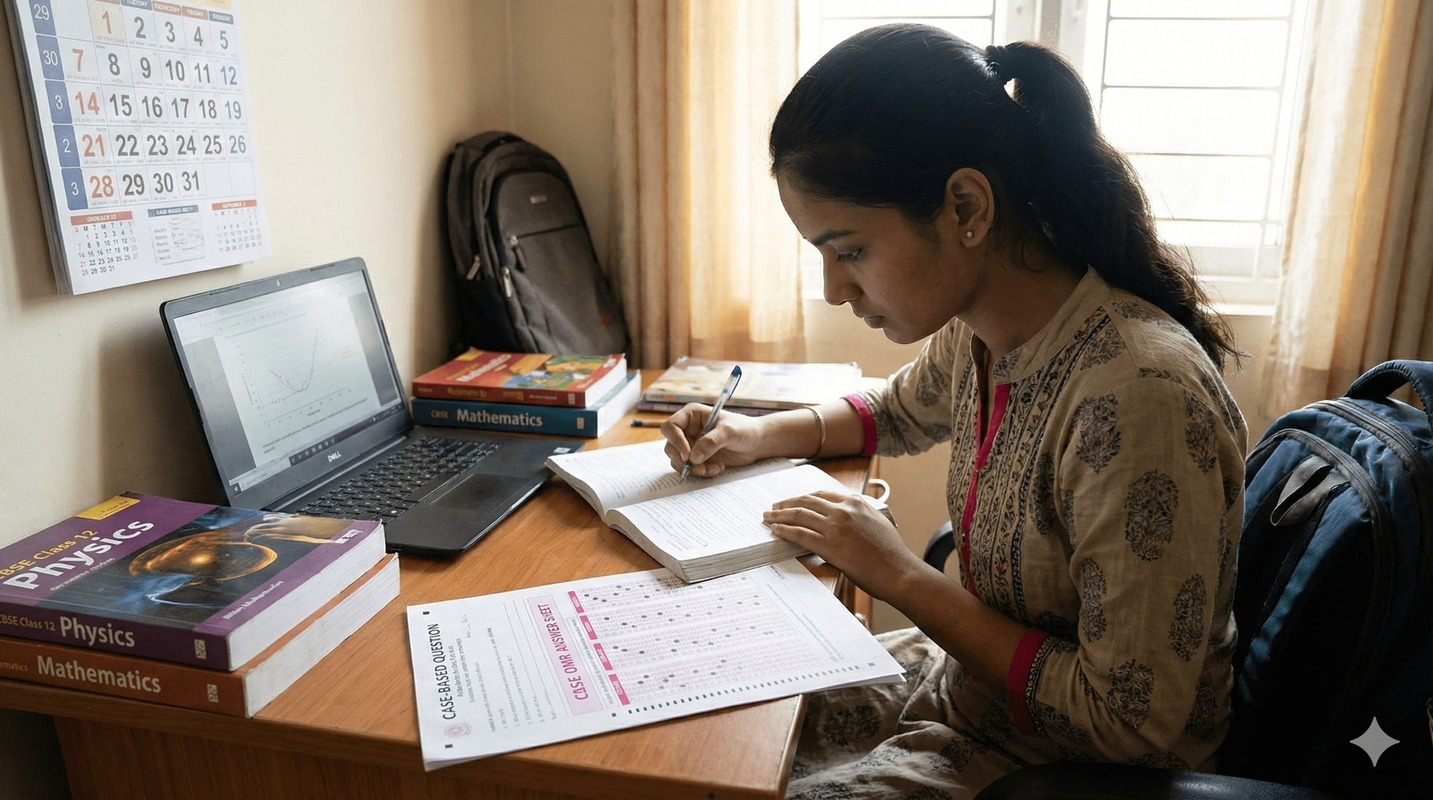
Yesterday evening, during a parent consultation, a mother told me something that I hear almost every exam season:
“Doctor, my son studies so much… but the moment he sees an exam paper, he freezes.”
And later that night, while reviewing my own notes on learning behaviour, I wrote down a line in my journal:
Confidence doesn’t come from studying more.
Confidence comes from knowing where you stand before the exam arrives.
That’s what this article is about.
Not perfection.
Not more pressure.
Just confidence — built the right way.
Why Students Struggle with Exam Confidence
In my clinic, I see two types of students:
1. The “Prepared but Panicked” student
They’ve studied everything but have no clue how they’ll perform on exam day.
2. The “Unsure of What They Don’t Know” student
They revise randomly and have no idea where their weaknesses actually are.
Both groups face the same emotional experience:
anxiety, unpredictability, and a fear of being surprised.
And what reduces fear?
Clarity. Predictability. Practice with awareness.
This is where personalized tests and real-time feedback change the entire game, especially for Indian students who grow up in high-pressure exam environments.
The Science: Feedback = Confidence
Not marks.
Not praise.
Not motivation lectures.
Feedback.
Neuroscience tells us that when students get immediate, clear feedback on their answers, something powerful happens:
- The brain closes knowledge gaps faster
- Anxiety reduces because there are no “unknown surprises”
- Students start trusting their abilities again
- Learning becomes active instead of passive
This is the same model used by top learning centers, cognitive-behaviour programs, and modern adaptive-learning platforms.
Why Personalized Tests Matter More Than Generic Revision
Traditional revision looks like this:
❌ “Study the whole chapter again.”
❌ “Revise everything.”
❌ Random questions from a guidebook.
It feels endless.
Unstructured.
And emotionally draining.
But personalized testing works differently.
It adapts based on your child’s real behaviour, not assumptions.
A student who struggles with linear equations will automatically get more practice there.
A student who understands photosynthesis will move ahead without wasting time.
This form of testing does something magical:
It turns exam fear into exam readiness.
Instant Feedback: The Emotional Superpower Students Need
When a child answers a question incorrectly on a test, three things usually happen:
Parents scold.
Teachers mark a red cross.
Kids lose confidence.
But when feedback is instant, gentle, and constructive, the emotional experience is totally different.
Instead of feeling defeated, they feel:
➡ “Oh! That’s where I went wrong.”
➡ “I get it now.”
➡ “Let me try again.”
This is how confidence grows — not in giant leaps, but in small, steady corrections.
What a Personalized Practice Session Looks Like
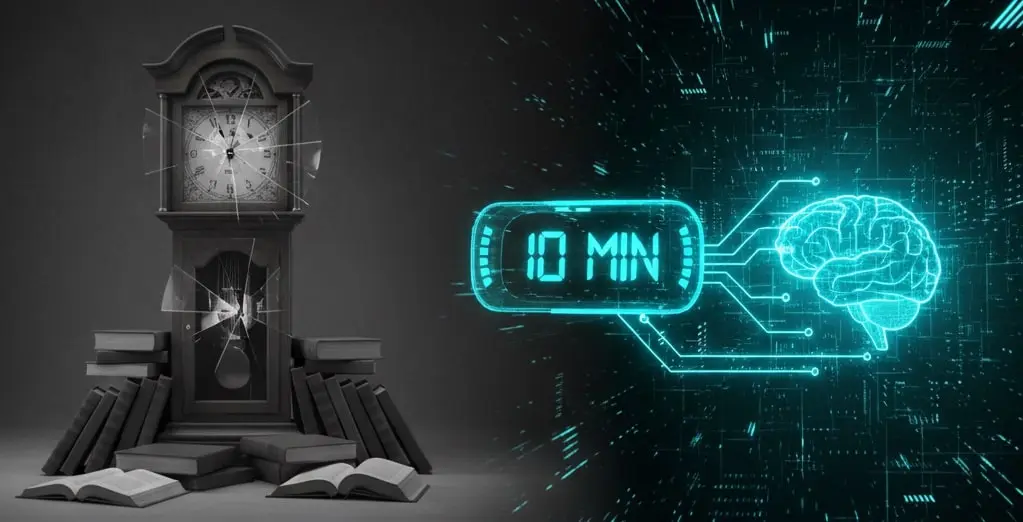
Imagine your child sitting down for a 15-minute session.
It starts with:
1. Quick Warmup Questions
Prepares the brain, reduces mental resistance.
2. Personalized Adaptive Test
Questions adjust based on the child’s strengths and weaknesses.
3. Instant Feedback
Not just telling the child what’s wrong, but why it's wrong.
4. Concept Boosters
Short explanations or examples that repair the misunderstanding.
5. Performance Snapshot
The child sees improvement in real-time — a massive confidence booster.
In my research, I’ve found that students who follow this pattern for even 10 days show:
- Reduced pre-exam anxiety
- Higher accuracy
- Better conceptual depth
- Greater willingness to attempt challenging questions
Why This Method Works Better Than Last-Minute Mugging
Most kids in India prepare for exams with a ritual that hasn’t changed for 30 years:
“Revise everything on the last day.”
It creates stress.
It builds fear.
And it rarely builds mastery.
But when kids take short personalized tests every day, something shifts:
- Their memory improves
- Their confidence stabilizes
- Their mistakes reduce
- Their understanding deepens
- They enter exam halls feeling ready, not scared
This is not just preparation —
This is scientific confidence-building.
Why Tools Like DeepSchool Make This Easier for Parents
Parents often ask me:
“Doctor, how do we create personalized tests daily? We don’t have that much time.”
You don’t have to.
Platforms like DeepSchool do it automatically:
- AI-generated personalized tests
- Instant feedback after each question
- Confidence-led mastery tracking
- Strength and weakness reports
- Short 10–15 min sessions
- Concept fixes that kids understand easily
The best part?
Kids actually enjoy the testing because it feels like progress, not punishment.
And as a doctor, I appreciate tools that lighten a parent’s emotional burden.
The Result: A Child Who Walks Into an Exam Hall With Quiet Confidence
Confidence isn’t loud.
Confidence isn’t dramatic.
Confidence doesn’t need motivation speeches.
Real exam confidence is quiet —
the calmness that comes from knowing:
“I’ve already seen what this exam can throw at me.”
“I know my mistakes.”
“And I know how to fix them.”
That is what personalized testing and instant feedback give our children.
A sense of preparedness.
A sense of control.
A sense of inner stability.
And that, more than anything, is the key to academic success.